There is something that happens the first time you pull into a driveway on the water, windows down, kids already unbuckling their seatbelts before the car is fully stopped. You have not even walked inside yet, and something just feels right.
We know that feeling. Not just because we have sold over 1,100 properties across Southern Georgian Bay and Simcoe County in 19 years, but because we live it ourselves. Our team are cottage owners. We have sat at the same screened-in porches you are dreaming about, wrestled with the same questions, and made the same late-night "should we do it?" calls. That experience does not just make us good at our jobs. It makes us the right people to have in your corner when one of the most emotional purchases of your life is on the line.
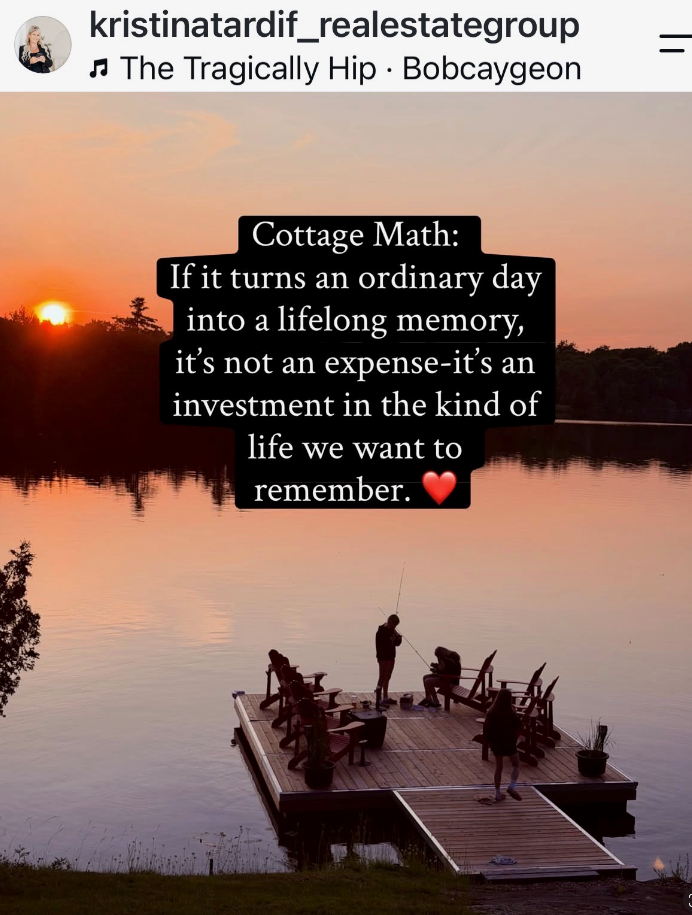
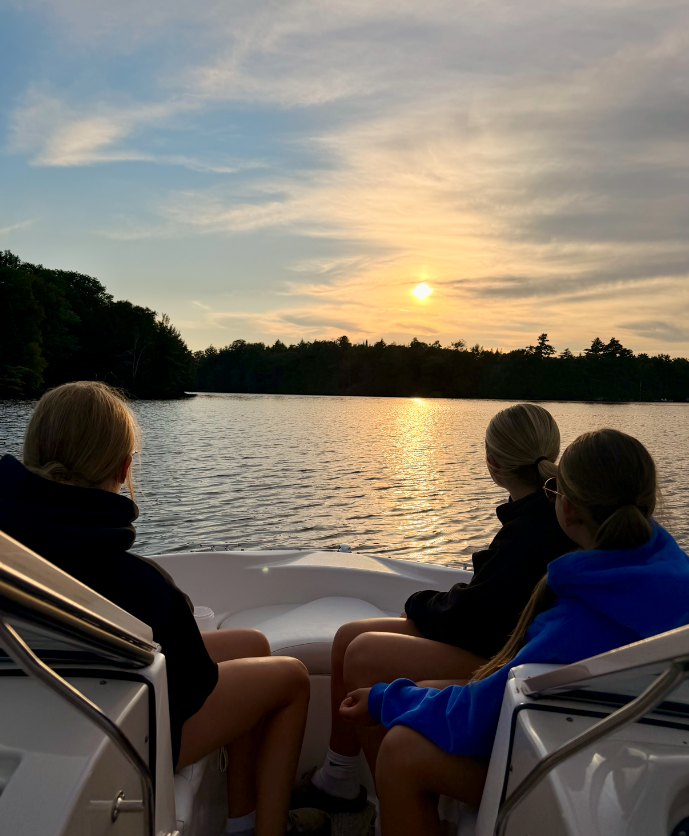
Because a cottage is not really about the property. It is about what happens inside it, and around it, and long after you have gone back home. It is the campfire that keeps going a little longer every time because nobody is quite ready to call it a night. It is the way the sun sets over the water and turns everything gold, and someone always says "we have to come back for this" even though you are not leaving until Sunday. It is the long slow days at the dock where the kids lose track of time entirely and so do you, and somehow that feels like the whole point. It is stepping outside at midnight and looking up at a black sky so full of stars you forget for a moment how big the world is and how small your worries are.
These are not moments you can manufacture. They grow out of a place, out of a routine, out of the same dock chair at the same time of year, until suddenly they are traditions. And those traditions become the things your children carry with them, and one day pass on to theirs.
That is what you are really buying.
We believe that. And we want to make sure you get it right.
Here are 10 things every cottage buyer needs to know before they sign anything.
1. Waterfront Is Not Just Water Access - Know the Difference
"Waterfront" and "water access" are not the same thing. Waterfront means the property touches the water. Water access often means you share a right-of-way, a communal dock, or a path to a public beach with neighbours. Both can be wonderful, but they come at very different price points and offer very different experiences. Ask specifically: Is this direct waterfront? What does the shoreline look like? Is there a dock, and is it deeded or permitted? Is the waterfront sandy, rocky, or weedy? Can you swim directly from the property?
2. The Septic System Can Make or Break the Deal
Septic is one of the most important and most overlooked parts of a cottage purchase. Many cottages are on older systems that have not been serviced or inspected in years. You need to know: When was the system last pumped and inspected? Does it comply with current county regulations? Is it sized for the number of bedrooms? What is the replacement cost if it fails? A failed or non-compliant septic can cost $30,000 to $60,000 or more to replace, and some older systems near the waterfront cannot be replaced in the same location due to setback requirements. Never skip this inspection.
3. Water Source and Water Quality Are Not Automatic
Cottage water often comes from a lake, a dug well, or a drilled well. Each has different implications. Lake water requires filtration systems that need to be maintained. Wells can run dry in drought years or show contamination. Before you fall in love with a property, ask: What is the water source? When was it last tested? Are there filtration or UV systems in place, and are they operational year-round? Is the water potable? We always recommend a current water quality test as part of any cottage offer.
4. Understand What "Year-Round" Actually Means
A listing described as "four season" or "year-round" should be verified, not assumed. Some cottages are winterized in name only. The real questions are: Is the road municipally maintained in winter, or is it a private road that closes? Is there adequate insulation and heating for -30 degree temperatures? Are the pipes properly protected from freezing? If you are planning to use the cottage in winter or considering it as a future retirement property, this distinction matters enormously.
5. Know the Rules Before You Renovate or Rent
Zoning and shoreline regulations in cottage country are layered and strict. Before you plan a dream addition or list the property on Airbnb, find out: What does the municipality allow in terms of short-term rentals? Is a licence required? What are the setback rules from the water for any structure? Is the existing dock, boathouse, or bunkie permitted? Unpermitted structures are common in cottage country, and in some cases they cannot be legalized after the fact. We flag all of this before you make an offer, not after.
6. Road Access and Road Fees Are a Year-Round Conversation
Private road properties are extremely common in cottage country, and they come with their own set of considerations. Find out: Is the road privately maintained? Is there a road association, and what are the annual fees? What is included in that fee — plowing, grading, repairs? Who is responsible if a culvert washes out? We have seen road fees range from a few hundred dollars a year to several thousand, and we have seen roads that are impassable in shoulder season. Know what you are committing to.
7. The Lot and the Shoreline Tell You as Much as the House Does
In cottage country, the lot is often the asset. The house can be renovated. The lot cannot be changed. We always walk the property with our buyers, not just the interior. What does the shoreline actually look like at water level? Is it a gradual sandy entry or a drop-off? What is the lot depth? Is it narrow with neighbours close on both sides, or does it have privacy? Is the lot sloped in a way that makes building a level deck difficult or costly? Is there a natural buffer or is it wide open to the road? These are things a listing photo does not always tell you.
8. Ask About Inclusions and What Stays With the Property
Cottage purchases often include more than just the structure. Boats, docks, dock equipment, kayaks, canoes, furniture, appliances, outdoor furniture, lawnmowers, and snowblowers can all be part of the deal or left off the table. Do not assume anything. Get the inclusions in writing, and walk through the property specifically to confirm what is being left. We have seen closing day disagreements over a garden shed and a floating dock. It is always cleaner to address it upfront.
9. Insurance Can Be Complicated
Cottage insurance is not the same as home insurance, and some properties are harder to insure than others. Key questions include: Is the property within a flood zone or on a high-risk shoreline? Does it have an older woodstove or a non-WETT-certified fireplace insert? Is it winterized? Is there a monitored alarm system? Some lenders and insurers require properties to meet specific criteria before they will extend coverage or financing. We always recommend speaking to a broker before you write an offer so there are no surprises.
10. Think About What Season You Are Buying In
The property you visit in July looks and feels completely different in November, and that matters. Summer hides a lot: soggy areas that are wet in spring, overgrowth that blocks sight lines, noise from neighbouring properties that aren't occupied in winter, and road conditions that change dramatically. If you are seriously considering a property, ask to visit in a different season, or at minimum ask us to walk you through what the shoulder seasons look like in that area. We know these lakes and these roads. We can tell you what questions to ask that the current owners may not volunteer.
When you are ready to find yours, we are ready to help.
Kristina Tardif Real Estate GroupRoyal LePage Locations North705-734-5204kristina@kristinatardif.com